Expat Home Guide Indonesia: Everything You Need Before Building or...
English ArticlesComplete guide to expat home guide Indonesia: tips, costs, and practical recommendations for building or buying a home in Indonesia.
Moving to Indonesia and building or buying a home? This expat home guide Indonesia covers the practical realities that most real estate agents won't tell you — from legal hurdles to cultural nuances, budget traps, and the day-to-day experience of managing a build as a foreigner.
Rent vs. Build vs. Buy: The Smart Sequence
Deciding whether to rent, build, or buy is the first major fork in the road. Each path has cost, time, and lifestyle implications that differ dramatically from what expats may expect in their home countries.
- Rent first, always: Live in Indonesia for at least 6–12 months before committing to a location or design. What looks perfect on Google Maps may not suit your lifestyle once you experience the traffic, neighborhood noise, flood patterns, and access to daily amenities.
- Build if: You have a very specific vision, the patience for a 12–18 month project with inevitable delays, and the budget cushion for cost overruns (typically 15–25% above initial contractor quotes).
- Buy existing if: You want move-in-ready, prefer a proven location, and are willing to renovate selectively. Existing homes often come with IMB (building permit) already in place — a significant advantage for expats.
Legal Framework: What Expats Can and Cannot Own
Understanding Indonesian property law is non-negotiable. The key principle: freehold title is reserved for Indonesian citizens. Foreigners cannot directly own land or property under Hak Milik.
- Hak Pakai (Right of Use): The most common legal instrument for expats. Grants the right to use and occupy land/buildings for a set period (usually 25–30 years, extendable). Available to KITAS and KITAP holders.
- Hak Sewa (Leasehold): A straightforward long-term lease agreement with the landowner. Simpler but offers less security than Hak Pakai.
- PT PMA (Foreign Investment Company): A company can hold Hak Guna Bangunan on land. This route is for commercial property or larger investments.
- Nominee arrangements: Many expats are tempted by the nominee system. This is illegal under Indonesian law and offers zero legal protection — avoid it entirely.
Finding the Right Location
Your choice of city and neighborhood will define your daily life more than the house design itself.
- Greater Jakarta: Areas like Kemang, Pondok Indah, BSD, and Sentul are popular among expat families. Proximity to international schools is the main driver.
- Bali: Canggu, Ubud, Sanur, and Jimbaran offer very different vibes. Beach proximity and creative communities make Bali unique.
- Yogyakarta: A rising star for expats seeking affordable living, rich Javanese culture, and a slower pace.
- Surabaya and Semarang: Major business cities with established expat communities and more affordable property.
- Lombok, Bintan, Batam: Emerging destinations for coastal living without Bali-level prices.
Cost Reality: What You Actually Spend
Building in Indonesia is cheaper than in Western countries, but understanding the real numbers prevents budget shock.
- Land cost: Jakarta IDR 20–50 million per m². Yogyakarta IDR 2–8 million/m².
- Construction cost: IDR 5–8 million per m² for standard quality, IDR 8–12 million/m² for premium finishes.
- Permits and fees: IMB/PBG, notaris fees, tax (BPHTB) — typically 5–10% on top.
- Hidden costs: Land filling, retaining walls, water bore, generator — often overlooked.
The Building Process
Construction culture in Indonesia differs from Western countries. Success depends on managing expectations.
- Hire a bilingual project manager: Construction terminology and permit processes require professional fluency.
- Site visits are non-negotiable: Walk the site weekly to catch alignment errors and material substitutions.
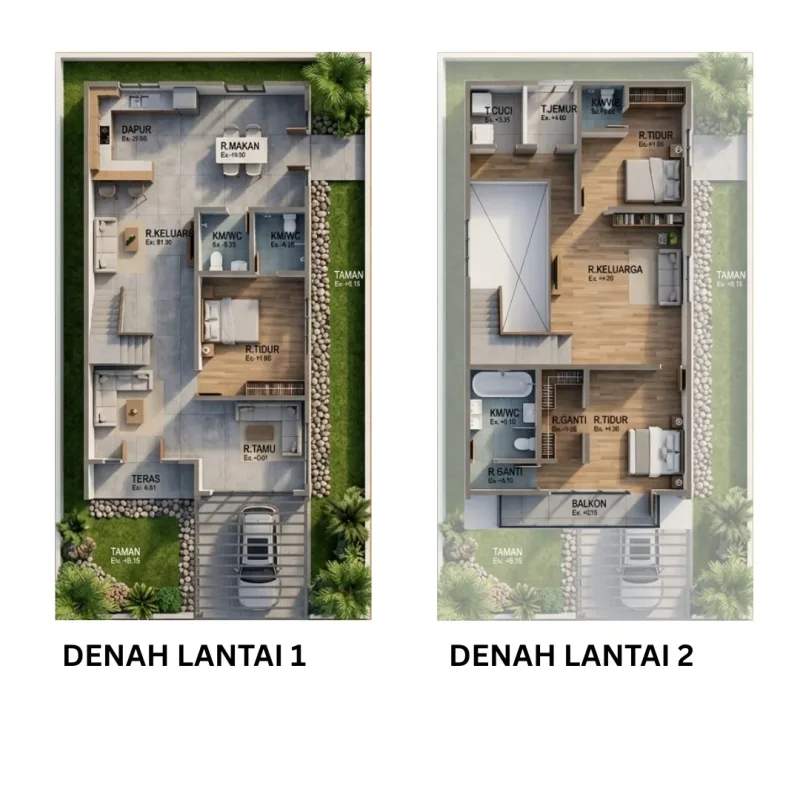
- Detailed drawings matter: DED drawings minimize builder improvisation. iDEHUNIAN plans provide a strong starting point.
- Payment milestones: Never pay large upfront sums. Withhold 5–10% for a 30-day defect liability period.
Utilities and Infrastructure
- Water: Some areas lack reliable PDAM. A bore well (sumur bor) can cost IDR 20–50 million.
- Electricity: Install backup generator or solar with battery storage for power outages.
- Internet: Check fiber optic coverage maps before committing to a location if remote work depends on it.
- Flood risk: Ask neighbors about flood history. Even slightly elevated land makes a dramatic difference.
Community and Cultural Navigation
Building a home in Indonesia is as much a social process as a technical one. Relationship-building with your local community (RT/RW) smooths many practical paths. Introduce yourself, respect construction hours, contribute to community night watch (siskamling), and embrace gotong royong — the Indonesian spirit of mutual cooperation. Most major cities have active expat Facebook groups and WhatsApp communities for recommendations and support.
Alternative: Pre-Designed Home Plans
For expats who want quality design without the full custom architecture process, iDEHUNIAN provides hundreds of architect-designed plans ready to download and hand to a local builder. Skip the 2–4 month design phase with plans spanning Modern Minimalist, Joglo-inspired, Tropical, and Industrial styles. Most plans can be adapted to your land dimensions with minor modifications.
Browse the iDEHUNIAN catalog with hundreds of ready-to-build plans.
Read Next
- Desain Rumah Minimalis 2026: Panduan Lengkap.
- Cara Membangun Rumah dari Awal.
- Beli Desain Rumah Online.
- Cara Memilih Kontraktor Bangunan.
Tips for Building in Indonesia
Building a house in Indonesia requires understanding of local regulations, climate, and construction practices. Always check the land certificate (SHM) before purchasing property. Apply for building permit (PBG) before starting construction — this is mandatory and protects your investment. Work with local architects and contractors who understand tropical climate design principles. Budget for 10-15% contingency fund for unexpected costs. The construction timeline for a standard house is 6-12 months depending on size and complexity. Consider using local materials which are often more suitable for the climate and more affordable. A well-planned house with proper documentation will maintain its value over time.
Produk Terkait
Lihat Semua Produk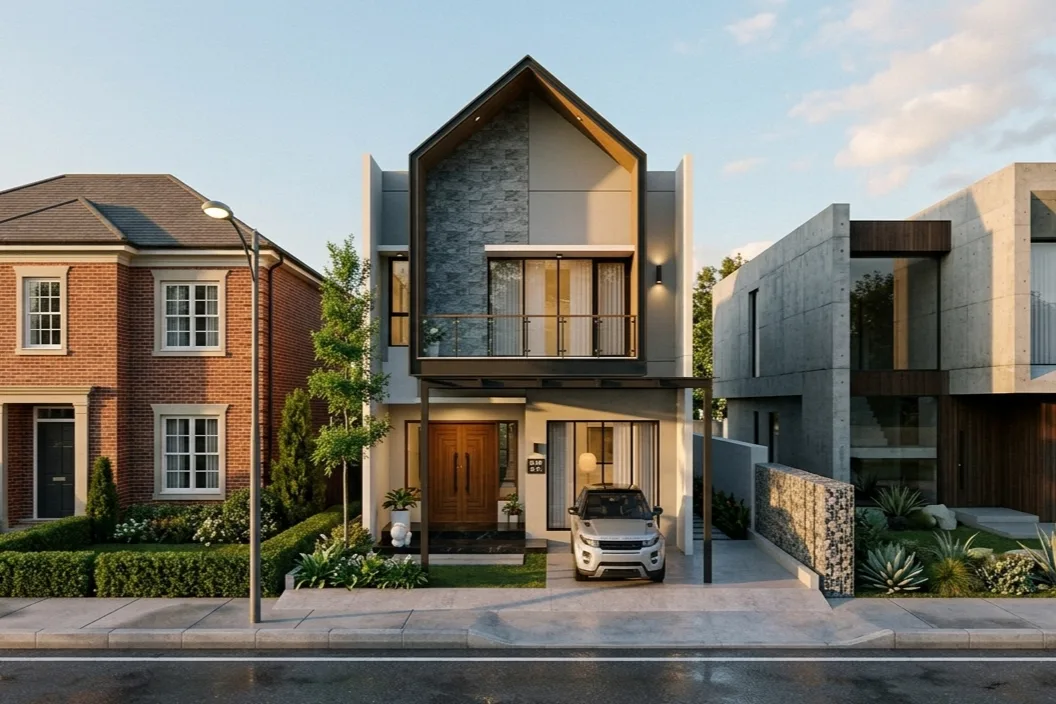 Modern
-50%
Modern
Rumah 7X18
Designed by Fast3D Studio
126 m2
182 m2
2 Lt
Gambar Kerja Tersedia
Harga desain
Modern
-50%
Modern
Rumah 7X18
Designed by Fast3D Studio
126 m2
182 m2
2 Lt
Gambar Kerja Tersedia
Harga desain
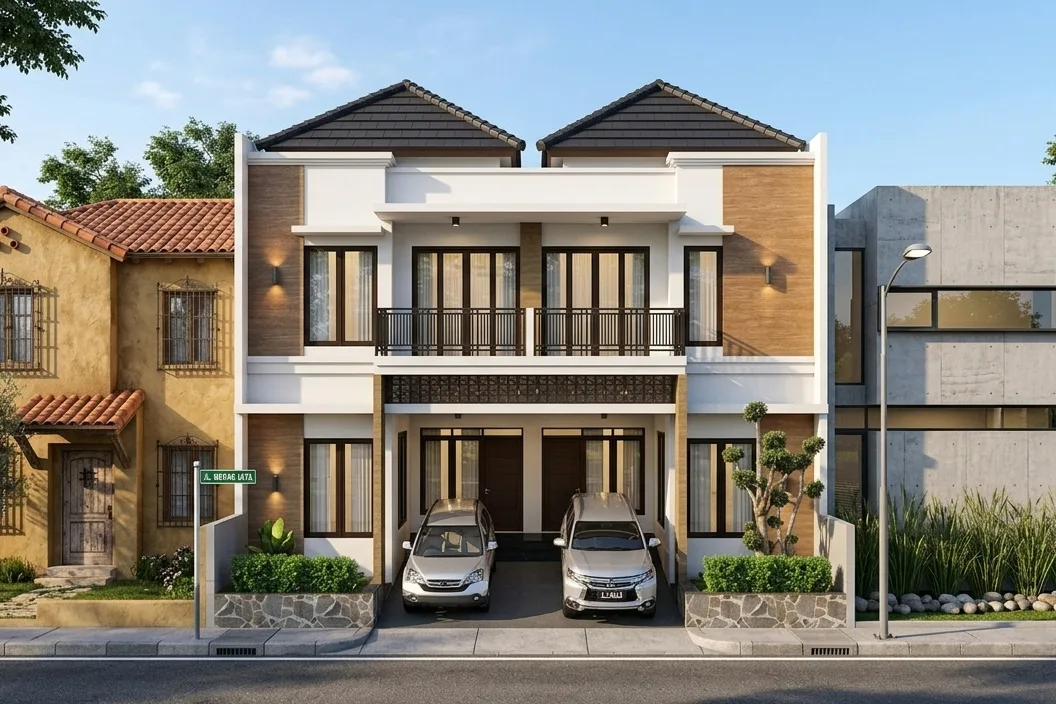 Kontemporer
-50%
Kontemporer
Rumah 12x15
Designed by Fast3D Studio
180 m2
300 m2
2 Lt
Gambar Kerja Tersedia
Harga desain
Kontemporer
-50%
Kontemporer
Rumah 12x15
Designed by Fast3D Studio
180 m2
300 m2
2 Lt
Gambar Kerja Tersedia
Harga desain
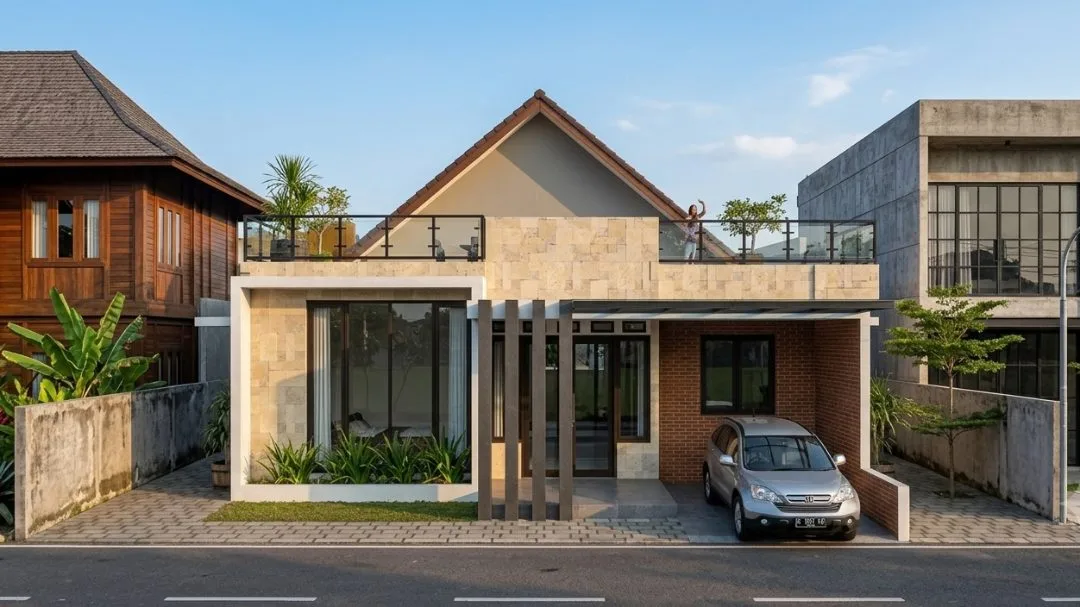 Kontemporer
-50%
Kontemporer
Rumah 10x13
Designed by Fast3D Studio
130 m2
129 m2
4 KT
Gambar Kerja Tersedia
Harga desain
Kontemporer
-50%
Kontemporer
Rumah 10x13
Designed by Fast3D Studio
130 m2
129 m2
4 KT
Gambar Kerja Tersedia
Harga desain
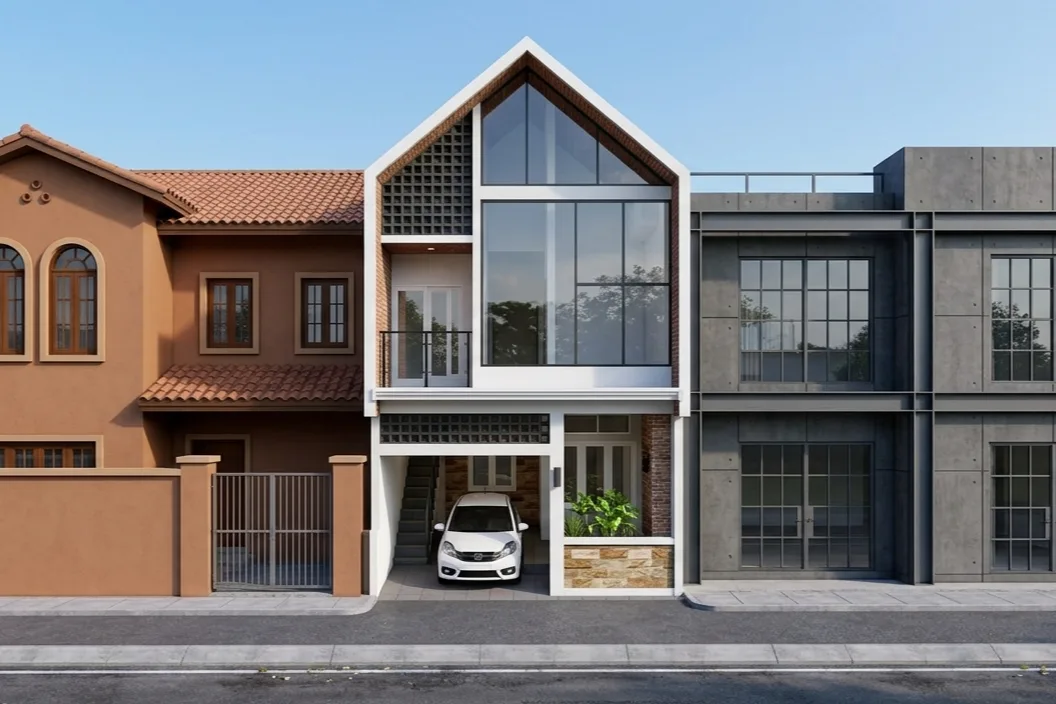 Minimalis
-50%
Minimalis
RUMAH 6X10 (KOST)
Designed by Fast3D Studio
60 m2
120 m2
2 Lt
Gambar Kerja Tersedia
Harga desain
Minimalis
-50%
Minimalis
RUMAH 6X10 (KOST)
Designed by Fast3D Studio
60 m2
120 m2
2 Lt
Gambar Kerja Tersedia
Harga desain