Indonesian House Design Styles: From Traditional Joglo to Modern...
English ArticlesComplete guide to Indonesian house design styles: tips, costs, and practical recommendations for building or buying a home in Indonesia.
Indonesia's architectural heritage is incredibly diverse. Understanding Indonesian house design styles helps you choose a direction that fits your taste, budget, and location. Here is a comprehensive overview of the major styles.
Traditional Indonesian Styles
- Joglo (Central Java): Iconic pyramid-shaped roof with four main columns (saka guru). Traditionally built without nails, using interlocking wood joinery. Modern Joglo interpretations keep the distinctive roof form while using contemporary materials and open-plan layouts. Best suited for large properties where the roof profile can be appreciated from a distance.
- Limasan (Javanese): A trapezoidal roof form that is simpler than Joglo but still distinctly Javanese. Often used for pendopo (pavilion) structures and verandas. Limasan roofs are practical for tropical climates as they allow excellent rainwater runoff and natural ventilation.
- Rumah Gadang (West Sumatra/Minangkabau): Dramatic buffalo-horn shaped roof ends (gonjong). Traditionally built as long houses for extended families. Modern adaptations focus on the striking roof silhouette while simplifying the interior layout.
- Tongkonan (South Sulawesi/Toraja): Boat-shaped roofs that curve upward at both ends. Highly decorative with intricate wood carving. Toraja-inspired design is niche but makes a powerful architectural statement.
- Rumah Betang (Kalimantan/Dayak): Long communal houses on stilts. The stilt concept (rumah panggung) is highly practical for flood-prone areas and has been adapted widely in modern Indonesian architecture.
Modern Indonesian Styles
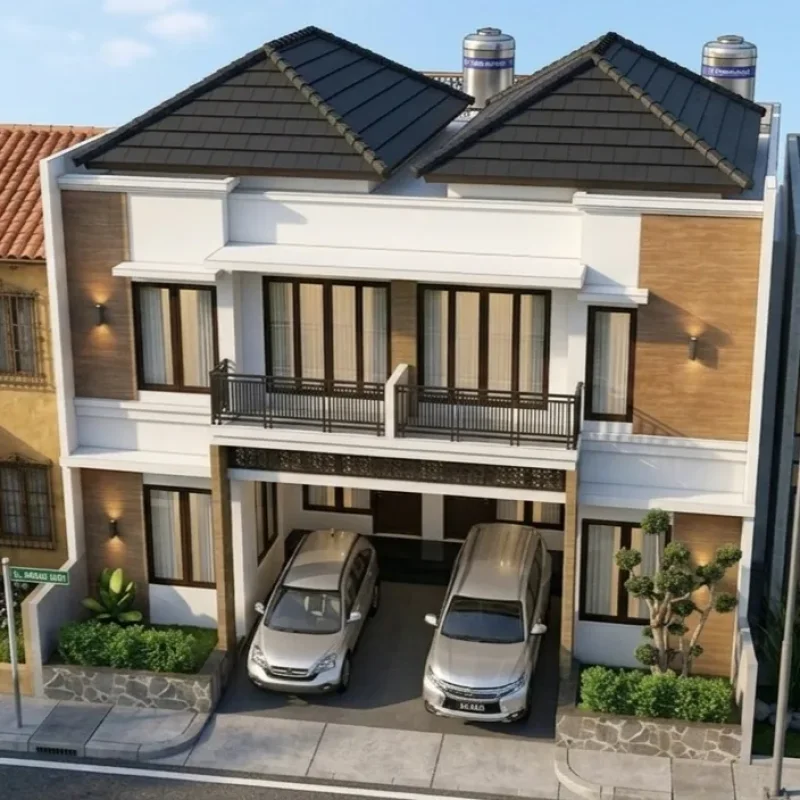
- Minimalist (Minimalis): The dominant urban style in Indonesia. Characterized by clean geometric forms, flat or low-pitched roofs, neutral color palettes, and efficient space planning. Popular for its affordability and clean aesthetic. Works well on smaller plots.
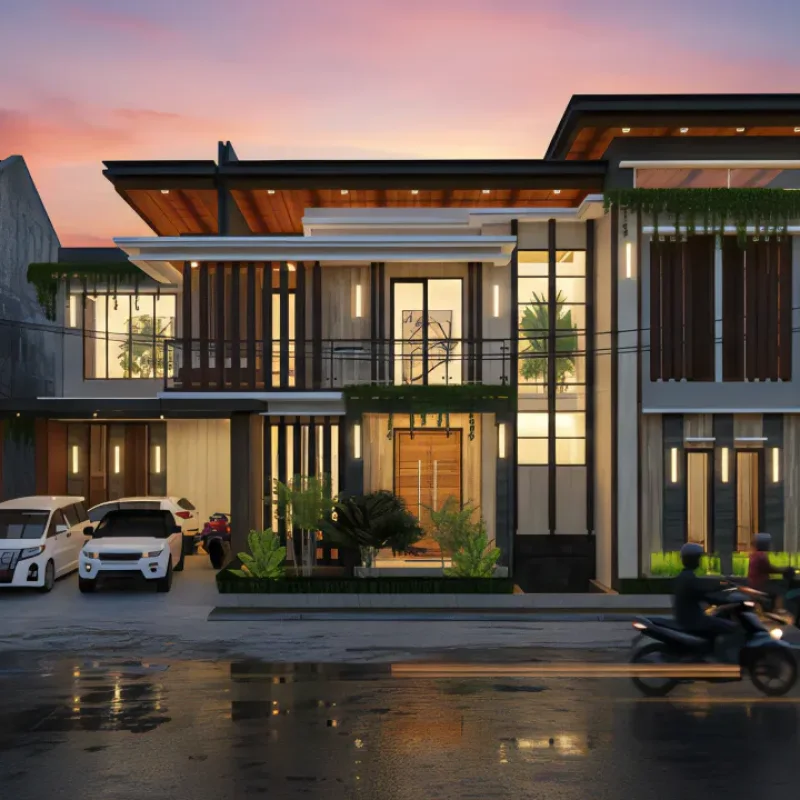
- Modern Tropical: Combines minimalist geometry with climate-responsive features: wide overhangs, cross ventilation, indoor-outdoor flow, natural materials, and lush landscaping. This is the most practical style for Indonesian climate and has become increasingly popular in the 2020s.
- Industrial: Exposed concrete, steel, brick, and glass. Often uses open-plan layouts with high ceilings and large windows. Popular in urban areas for its edgy aesthetic, but requires careful design to avoid excessive heat gain in tropical conditions.
- Mid-Century Modern: A growing trend in Jakarta and Bali. Clean lines, large windows, open floor plans, and integration with nature. The tropical mid-century style from the 1950s–60s Indonesia (architects like Han Awal and Friedrich Silaban) is being rediscovered.
Regional and Fusion Styles
- Bali Style: Globally recognized for its indoor-outdoor living, thatched roofs (alang-alang), stone walls, water features, and tropical gardens. Modern Balinese architecture adapts these elements while using contemporary construction methods.
- Dutch Colonial (Indische): High ceilings, large windows, shutters, wrap-around verandas, and steeply pitched roofs. Many restored colonial homes in Menteng (Jakarta) and Bandung are highly sought after. This style works exceptionally well in tropical climates.
- Chinese Peranakan: Ornate facades, colorful ceramic tiles, elaborate carvings, and courtyard layouts. Seen in older districts of Jakarta (Glodok, Kota Tua), Surabaya, and Semarang.
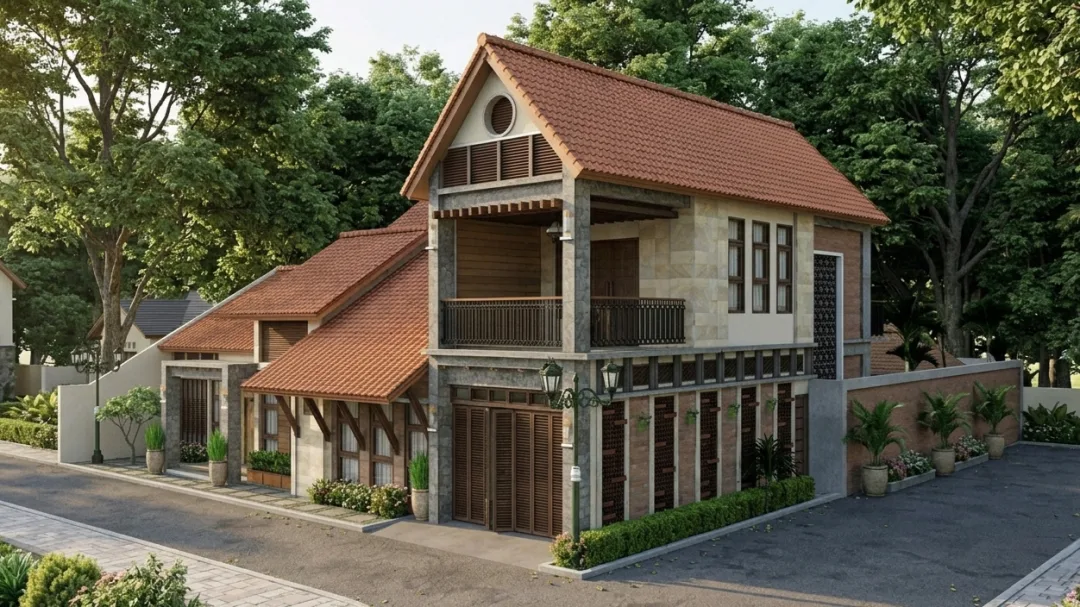
- Contemporary Joglo: The most successful fusion style. Combines the dramatic Joglo roof with modern open-plan living, glass walls, and minimalist interiors. Popular for large houses in Yogyakarta, Solo, and Jakarta's southern suburbs.
Choosing the Right Style for Your Home
Your choice of style should be guided by the location (urban vs. rural, climate microzone), budget (traditional Joglo can be expensive to build authentically), lot size and shape, local regulations (some housing clusters have design guidelines), and maintenance commitment (traditional materials like wood require more care). The most successful homes in Indonesia blend aesthetic preferences with practical climate response. A well-designed house that works with the tropical environment will always be more comfortable and cost less to maintain than one that fights it.
Explore hundreds of house designs in every style at the iDEHUNIAN catalog.
Read Next
Tips for Building in Indonesia
Building a house in Indonesia requires understanding of local regulations, climate, and construction practices. Always check the land certificate (SHM) before purchasing property. Apply for building permit (PBG) before starting construction — this is mandatory and protects your investment. Work with local architects and contractors who understand tropical climate design principles. Budget for 10-15% contingency fund for unexpected costs. The construction timeline for a standard house is 6-12 months depending on size and complexity. Consider using local materials which are often more suitable for the climate and more affordable. A well-planned house with proper documentation will maintain its value over time.
Produk Terkait
Lihat Semua Produk Modern
-50%
Modern
Rumah 7X18
Designed by Fast3D Studio
126 m2
182 m2
2 Lt
Gambar Kerja Tersedia
Harga desain
Modern
-50%
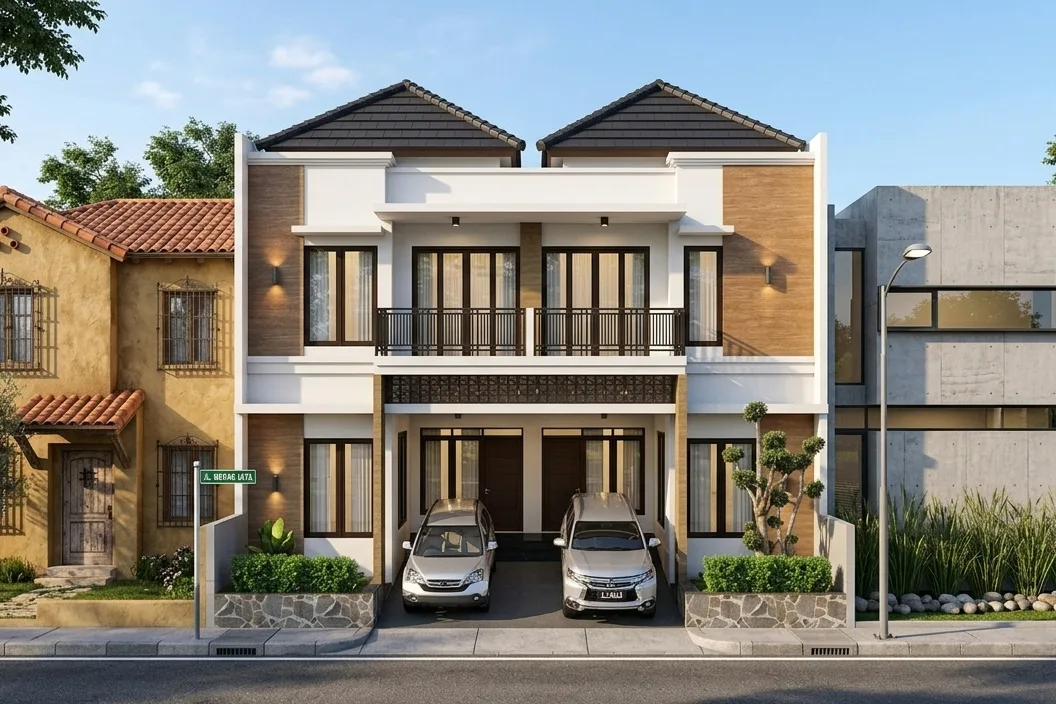
Modern
Rumah 7X18
Designed by Fast3D Studio
126 m2
182 m2
2 Lt
Gambar Kerja Tersedia
Harga desain
 Kontemporer
-50%
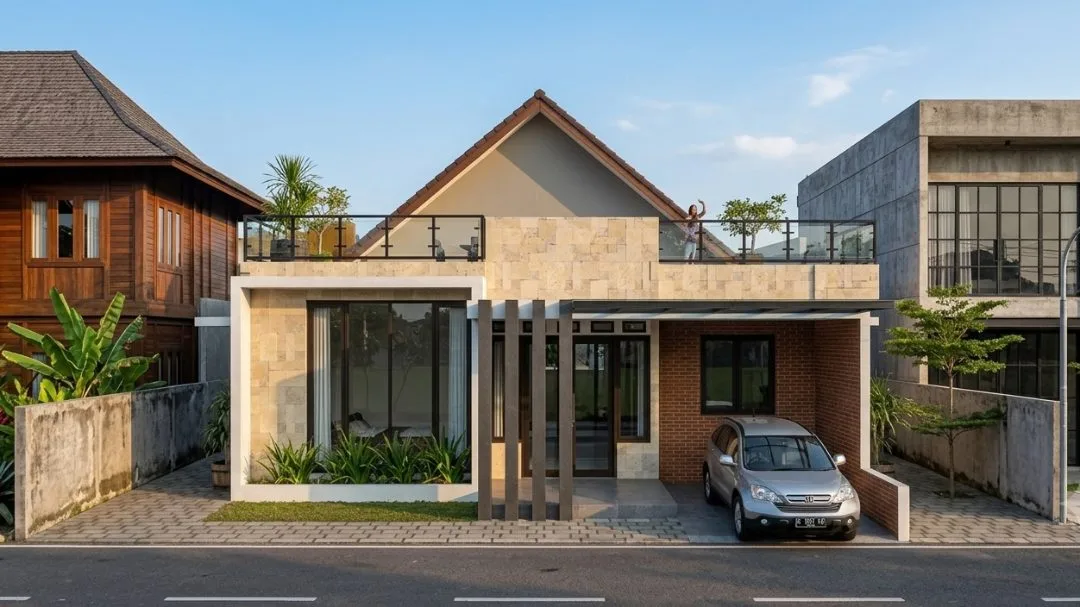
Kontemporer
Rumah 12x15
Designed by Fast3D Studio
180 m2
300 m2
2 Lt
Gambar Kerja Tersedia
Harga desain
Kontemporer
-50%
Kontemporer
Rumah 12x15
Designed by Fast3D Studio
180 m2
300 m2
2 Lt
Gambar Kerja Tersedia
Harga desain
 Kontemporer
-50%
Kontemporer
Rumah 10x13
Designed by Fast3D Studio
130 m2
129 m2
4 KT
Gambar Kerja Tersedia
Harga desain
Kontemporer
-50%
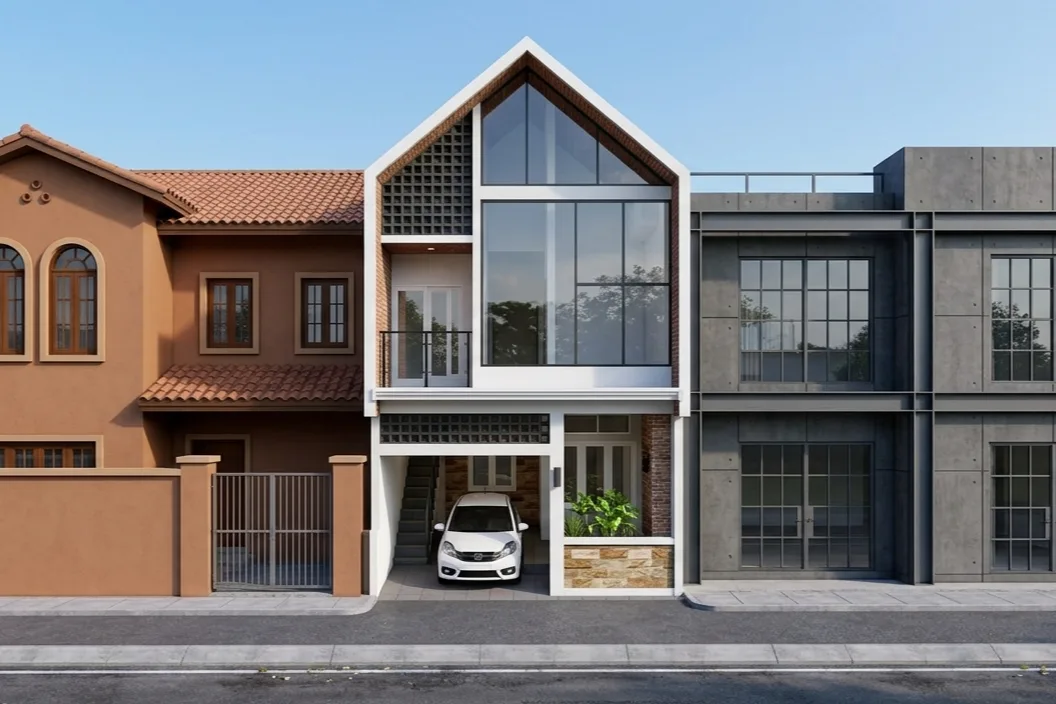
Kontemporer
Rumah 10x13
Designed by Fast3D Studio
130 m2
129 m2
4 KT
Gambar Kerja Tersedia
Harga desain
 Minimalis
-50%
Minimalis
RUMAH 6X10 (KOST)
Designed by Fast3D Studio
60 m2
120 m2
2 Lt
Gambar Kerja Tersedia
Harga desain
Minimalis
-50%
Minimalis
RUMAH 6X10 (KOST)
Designed by Fast3D Studio
60 m2
120 m2
2 Lt
Gambar Kerja Tersedia
Harga desain